
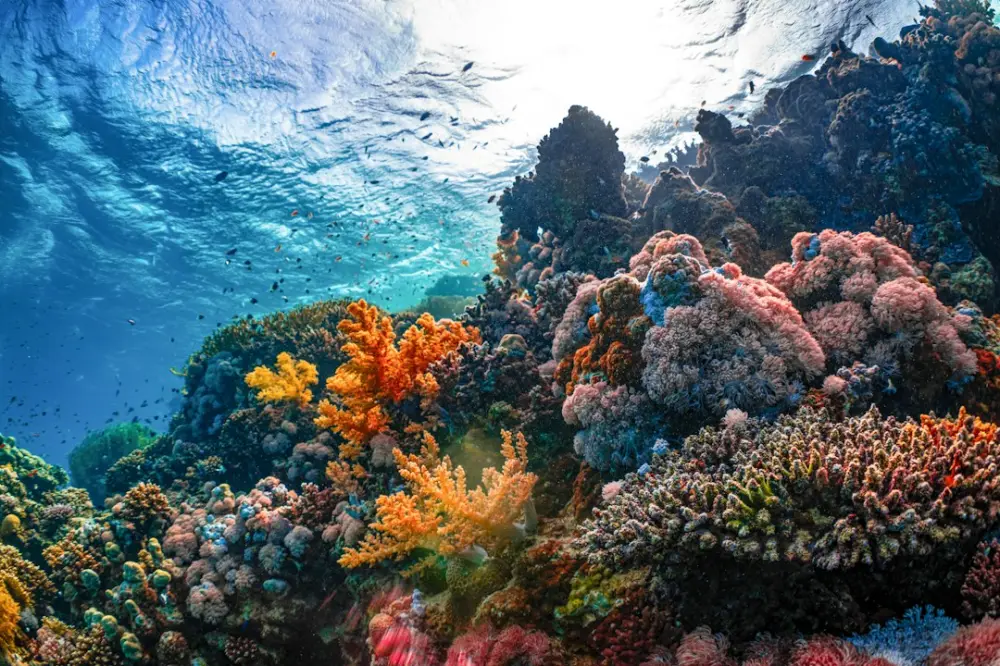
Marine biodiversity refers to the variety of life forms within ocean environments, while ecosystem pressures are the external stressors—such as overfishing, habitat destruction, and climate-driven acidification—that disrupt these biological networks. Together, these concepts measure the resilience of marine life against human and environmental factors that threaten to collapse existing food webs and natural habitats.
Understanding these pressures is essential for managing modern supply chains and infrastructure. From the way we source minerals for electric vehicle batteries to the cooling requirements of coastal data centers, every industrial decision ripples through the water column, affecting species diversity and the stability of the ecosystems that regulate our global climate and food security.
What marine biodiversity and pressures mean
Marine biodiversity is not a single metric; it is a layered concept encompassing genetic diversity within species, the variety of species themselves, and the complex array of ecosystems they inhabit. When we talk about biodiversity, we are looking at everything from the microscopic phytoplankton that produce half of the world’s oxygen to the massive blue whales that move nutrients across vast distances. Each organism plays a specific role in maintaining the ocean's chemical and physical balance.
Ecosystem pressures are the forces that push these systems away from their natural state. These can be categorized into several distinct types. Physical pressures include the destruction of the seabed through activities like bottom trawling or the construction of offshore infrastructure. Chemical pressures involve the introduction of pollutants, such as agricultural runoff that leads to nitrogen-heavy "dead zones" or the rising acidity caused by carbon dioxide absorption. Biological pressures often manifest as the introduction of invasive species through shipping ballast water or the removal of key predators via industrial fishing.
A specific example of monitoring these pressures can be found in the work of organizations like Ifremer (the French Research Institute for Exploitation of the Sea). Their data often highlights how local pressures, like the migration of gilthead seabream in the Mediterranean, serve as indicators of broader shifts. As water temperatures rise, these fish alter their traditional spawning and feeding grounds, signaling that the underlying ecosystem is under thermal stress. This movement isn't just a biological curiosity; it changes the local fishing economy and the predatory balance within the seagrass meadows of the region.
Why marine biodiversity matters
The health of the ocean is the foundation of global economic and environmental stability. Many people view the ocean as a distant resource, but its biodiversity provides services that are integrated into daily life. For instance, seagrasses and mangroves act as "blue carbon" sinks, sequestering carbon at rates much higher than terrestrial forests. When these ecosystems are pressured and biodiversity drops, we lose one of our most effective tools for climate regulation.
From a commercial standpoint, sustainable fishing is key to marine health because it ensures that fish stocks can regenerate. When biodiversity is high, ecosystems are more resilient to shocks. If one species declines, another may be able to fill its ecological niche. However, in a low-biodiversity environment, the loss of a single species can cause a total collapse. This has direct implications for the billions of people who rely on seafood as their primary source of protein and the millions of jobs tied to the maritime economy.
Furthermore, marine organisms are a primary source of biochemical compounds used in pharmaceuticals and biotechnology. Many of the enzymes used in PCR testing and certain cancer treatments were first discovered in deep-sea hydrothermal vent bacteria or reef-dwelling sponges. By allowing ecosystem pressures to erode biodiversity, we are essentially destroying a biological library before we have had the chance to read the books. Understanding how ocean conservation impacts the future of our medical and technological advancement is vital for long-term planning.
How ecosystem pressures work
Ecosystem pressures rarely act in isolation; they are cumulative. This is known as the "cocktail effect." For example, a coral reef might be able to survive a slight rise in water temperature if it is otherwise healthy. However, if that same reef is also being hit by sediment runoff from coastal construction and the overfishing of parrotfish (which eat the algae that can smother coral), the combined pressure becomes too much, leading to a reef collapse.
Trophic cascades are a primary mechanism through which these pressures manifest. A trophic cascade occurs when a pressure targets a specific level of the food chain, causing a ripple effect throughout the entire system. In the North Atlantic, the overfishing of large sharks led to an explosion in the population of rays. These rays, in turn, overconsumed the scallops and clams that filtered the water, leading to a decline in water quality and the collapse of local shellfish industries. This shows how a biological pressure on one species can lead to a physical pressure (water turbidity) on the entire habitat.
Common misconceptions
One of the most persistent misconceptions is the idea that the ocean is "too big to fail." Because the sea covers over 70% of the planet and has an average depth of nearly 4,000 meters, there is a false sense that it can absorb an infinite amount of waste or withstand endless extraction. In reality, most marine life is concentrated in a thin layer near the surface or along coastal shelves, making it highly vulnerable to human activity.
Another common mistake is focusing exclusively on plastic pollution as the only major threat. While plastic is a significant issue, it is often a visible symptom of a larger problem. Chemical pollutants, such as PFAS (per- and polyfluoroalkyl substances) and micro-pollutants from pharmaceuticals, are often more dangerous because they are invisible and bioaccumulate in the food chain. A fish might look healthy despite swimming in water with high concentrations of endocrine disruptors that prevent it from successfully reproducing.
There is also the belief that marine protected areas (MPAs) are a "silver bullet" for biodiversity. While MPAs are essential, they are only effective if they are properly managed and connected. A small patch of protected water cannot save a migratory species if the rest of its route is subject to intense pressure. Effective conservation requires a systemic approach that looks at the connections between different zones rather than just drawing lines on a map.
First steps for mitigating ecosystem pressures
- Start by auditing supply chains to identify raw material extraction points that may overlap with high-biodiversity benthic zones.
- The first step for industrial operators is to implement rigorous thermal discharge monitoring to prevent localized heat stress in coastal waters.
- To begin addressing chemical pressures, reduce the use of nitrogen-based fertilizers in drainage basins to prevent harmful algal blooms and eutrophication.
- Next, support the establishment of international shipping corridors that utilize acoustic damping technologies to lower underwater noise pollution.
- Finally, prioritize sourcing from vendors that can prove sustainable fishing is key to marine health through transparent, data-backed ecological reporting.
Key terms
- Benthic Zone: The lowest level of a body of water, including the sediment surface and some sub-surface layers. Pressures here often come from mining or bottom trawling.
- Eutrophication: A process where water becomes overly enriched with nutrients, usually from agricultural runoff, leading to excessive plant growth and oxygen depletion (hypoxia).
- Anthropogenic: Environmental change or pressures originating from human activity, as opposed to natural processes.
- Pelagic: Relating to the open sea, away from the coast and the ocean floor. Pelagic species are often the most affected by industrial fishing and shipping noise.
- Resilience: The capacity of an ecosystem to respond to a perturbation or disturbance by resisting damage and recovering quickly.
- Bioaccumulation: The gradual accumulation of substances, such as pesticides or other chemicals, in an organism. This occurs when an organism absorbs a substance at a rate faster than that at which the substance is lost or eliminated.
At High Seas, we look at these marine pressures through the lens of the systems we build on land. The transition to electric vehicles requires minerals that may soon be mined from the deep sea, and the data centers powering our digital lives require cooling systems that can disrupt local marine temperatures. By understanding the link between our infrastructure and marine biodiversity, we can make more informed choices about how we interact with the ocean. High Seas is dedicated to exploring these intersections, providing a practical look at how conservation can be integrated into the very fabric of our modern economy.